
 By Pastor John Hulden
Our synod’s annual Power and Boundaries Workshops have just concluded. This year they were led by my colleague from the Southeastern Minnesota Synod, Pastor Emily Carson. Karen Alexander, our synod’s Administrator for Roster and Call Process, made sure there were invitations/reminders/gracious demands sent to deacons and pastors who have not attended these workshops in the last three to five years. All rostered leaders, in their letter of call, are required to attend to their professional and personal boundaries. So, every year we host these workshops. Lo and behold, Karen let me know that I was on the list of “need to attend again.” I guess all these years I’ve been hosting and attending these workshops, I failed to register. : )
Teaching 7th graders the Ten Commandments always reminds me of a mini workshop on power and boundaries. I would advise those young people that when you work at following these ten rules, you’ll have a good life, deep friendships, and you’ll only miss out on a few parties. If you think about it, the two tablets of stone given to Moses are the OG of lessons in Power and Boundaries.

With all the legislation flying around many states ordering the public display of the 10 Commandments, rarely is it acknowledged that we Lutherans number them differently than many other denominations. Also, in our church art, we only put the first three commandments on one tablet (our relationship with God) and the last seven on the second tablet (our relationship with each other).
I would remind those 7th Graders that our God isn’t stupid. The second tablet of rules aligns with our lives as we grow older. #4 commandment: honor the first people you meet, your parents. #5 might be about the next people you meet: don’t kill your siblings, remembering Cain and Abel. #6: As you get older, you may be attracted to someone else, if so, have an honorable relationship. #7: Should I get a job or just steal stuff? #8: Should I gossip in the break room at work or speak well of others? #9 & 10: Be happy with the gifts given you—don’t covet other people’s stuff or other people’s relationships.
It’s always a pleasant surprise when scientific studies back up what we teach. Thanks to a recent blog from Leaderwise.org, I read about the study of two playgrounds:
The project was simple: Ask a couple teachers to bring their classes to two specific playgrounds and watch what happens. Both playgrounds had similar attractions, and both were in safe places; the main difference was that one of them had a fence around the park. [The researcher] noted that on the playground with no fence, “the children remained huddled around their teacher, fearful of leaving out of her sight.” In contrast, the space with a clear and distinct boundary “exhibited drastically different results, with the children feeling free to explore within the given boundaries.”
by Laura Beth Buchleiter https://www.leaderwise.org/blog/boundaries-hold-us-free
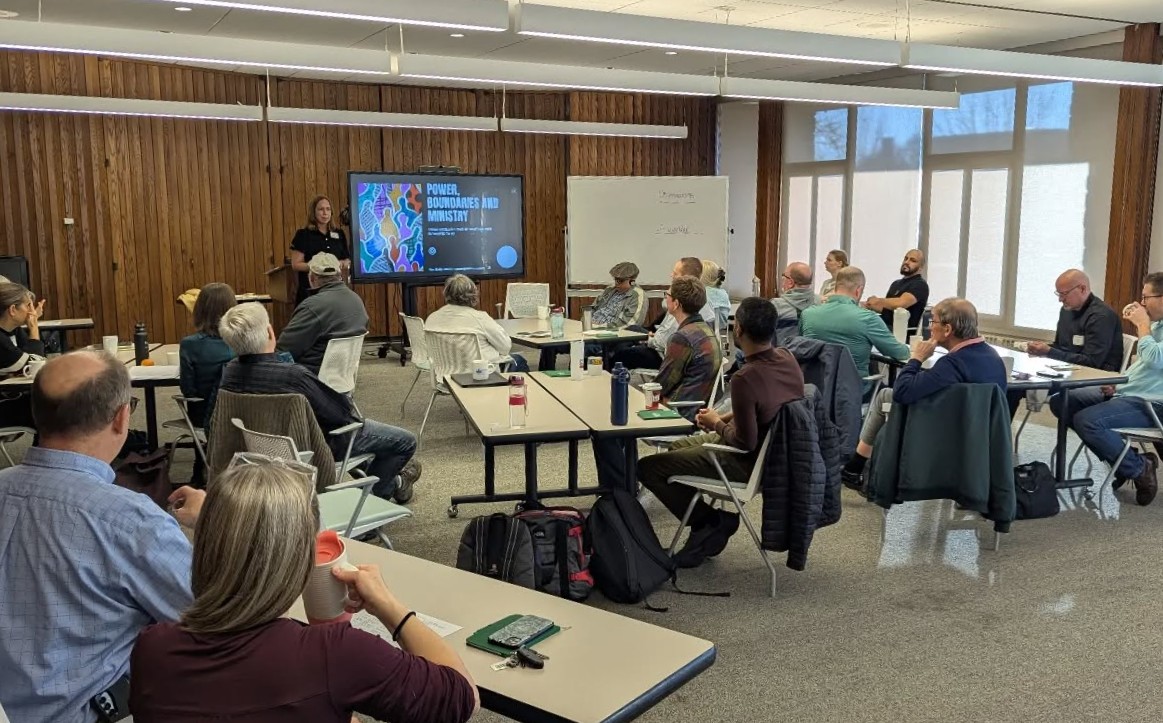
Boundaries Training with Rev. Emily Carson on November 14, 2025
How about that? Fences and boundaries are good and help us flourish.
For years I’ve been explaining my weird pastor job serving this synod by saying I get invited by congregational leaders to parties and problems. A party, for example, can come in the form of a spirit-filled call process that crescendos towards the installation of a new pastor or deacon. A problem? Every season there seems to be one that I haven’t seen before. Yes, problems seem novel on the surface, but many stem from a boundary crossing or an abuse of power.
So, hey church workers, keep showing up every three years to those workshops. It’ll do you good. It’ll do the whole church good. And you’ll only miss a few parties.