
This post is one of the monthly posts blog posts written by the deans of the conferences of the Minneapolis Area Synod.
 By Pastor Katie Jorgenson
Faith Lutheran Church, Waconia
Dean of the Southwest Conference
What American corporate culture labels as weakness is actually at the very heart of true church community: relying on one another’s gifts and being honest about our needs.
A friend of mine was sharing his work culture and how challenging it was to have a culture of self-improvement or a personal growth mindset. He shared how his friend, the company CEO, felt like he was ‘supposed to know everything,’ when, in fact, he knew he did not know everything. It left me wondering, how often do churches expect pastors to know everything?
For over a decade, the University of Notre Dame has been studying what it means for pastors to flourish in ministry. Researchers, led by Dr. Matt Bloom, have conducted interviews and surveys with over 20,000 pastors. Years ago, I was selected for the interview portion of the Flourishing in Ministry research project and sat for multiple interviews.
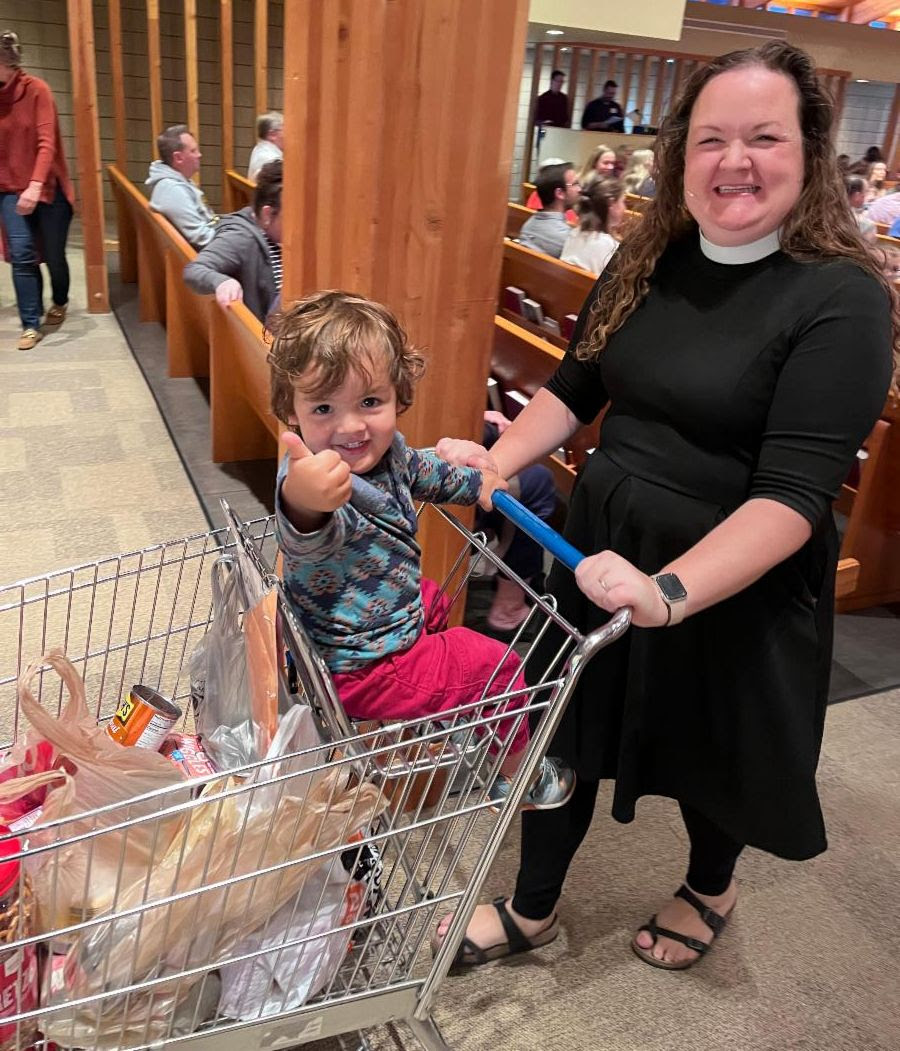
Pastor Katie using one of her many competencies
One finding from the research contends that “performing all of the tasks required of most local church pastors would require sixty-four different personal competencies.” The researchers note that it is inconceivable and impossible for one person to excel in all 64 distinct knowledge, skills, abilities, and personal characteristics.[i] This particular study focused on pastors, but surely similar statistics could be true about lay leaders and people in all different kinds of jobs as well.
Recently, a pastoral colleague shared that during a performance evaluation, they were criticized for asking for help with a new responsibility. Is the church, in practice, overlooking our calling to be the Body of Christ—collaborative and interconnected—when we expect individuals to excel across so many areas? Are we forgetting what it truly means to be church together?
In the Apostle Paul’s first letter to the Corinthians, he writes, “Now there are varieties of gifts but the same Spirit… To each is given the manifestation of the Spirit for the common good.” (1 Corinthians 12:4, 7) Congregations need the gifts of all those who show up during the week, whether people come for worship or faith formation, or to share in meals or the gifts of music.
At a worship service a few years ago, we were short one sound tech. I had a proficient knowledge of the system, so I stepped in. The senior pastor began leading worship and noted that I was running the sound booth. About five minutes later, one of my volunteers came rushing in, “I was watching the livestream and heard you were running the soundboard, so it’s good I live close,” he said. This volunteer said to me, “Get up there and lead worship. I can’t do your job, so let me do mine.”
Being church together is about sharing our Spirit-given gifts with one another for the common good of all. What gifts and skills do you have that you can share with the Body of Christ, so that we can all flourish in our shared life together?
—–
[i] Dr. Matt Bloom, Flourishing in Ministry: How to Cultivate Clergy Wellbeing, 9