
 By Nicholas Tangen
Last month, we received word that the Minneapolis Area Synod would receive a “scaling grant” from the Lilly Endowment to continue and expand the work of Faith & Neighboring Practices. We are so grateful for the possibilities that this grant affords us and are looking forward to growing our team and imagining new pathways for accompanying churches as they embed themselves in the places where God has called them.
Over the past months, I’ve been struck again and again by the power and necessity of connected communities – those networks of gifts, strengths, and capacities that build resilient neighborhoods. I’m curious and committed to discovering ways that our Synod can be part of supporting those networks in churches and neighborhoods across the region, learning from neighbors across the country and right next door.
In September, I attended the World Hunger Leaders Retreat i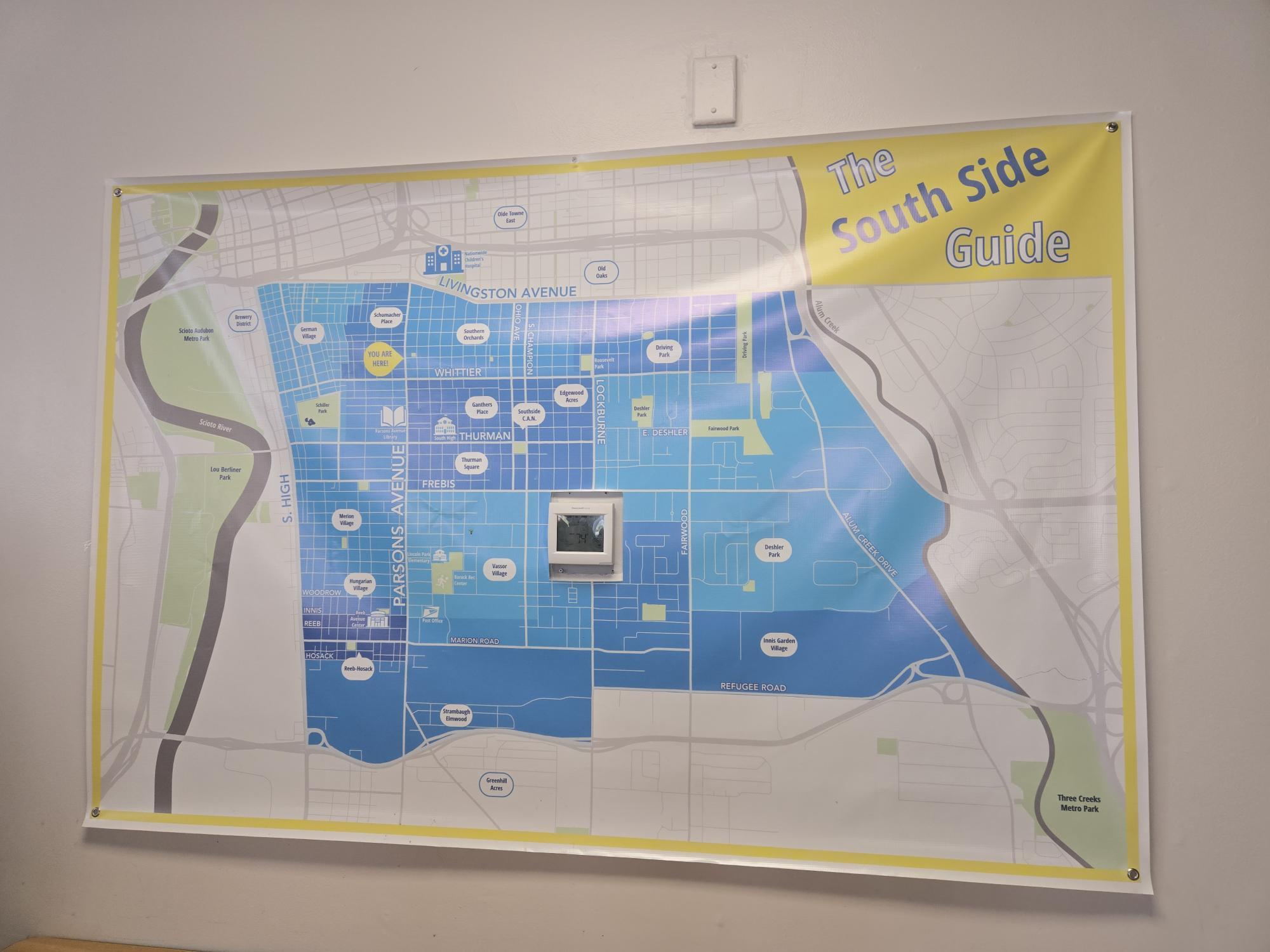 n Columbus, Ohio, for a few days of community-building and learning alongside hunger leaders from across the country. We spent one of our days visiting ministry and hunger sites across the city, connecting with neighbors, church members, and clergy committed to the common good.
I was especially inspired by the Church for All People on the South Side of Columbus – a community grounded in Asset-Based Community Development and the power of relational transformation. We spent the afternoon with Deacon Katelin Hansen who introduced us to the South Side and talked about Church for All People’s core values — a divine economy of abundance, a front porch for all people, the glass is half full, hospitality is radical, start small but start, and grace is touchable.
Grounded in these commitments, Church for All People has created an incredible network of ministries and communities contributing to the common good in Columbus. Their church began with a free store, where neighbors can shop for clothing and household goods. They run the Fresh Market, one of the largest distributors of free food in the city. And through their community, housing development organizations have contributed to the creation of more than 350 units of affordable housing. I was blown away by the incredible reach of this one faith community in their neighborhood.
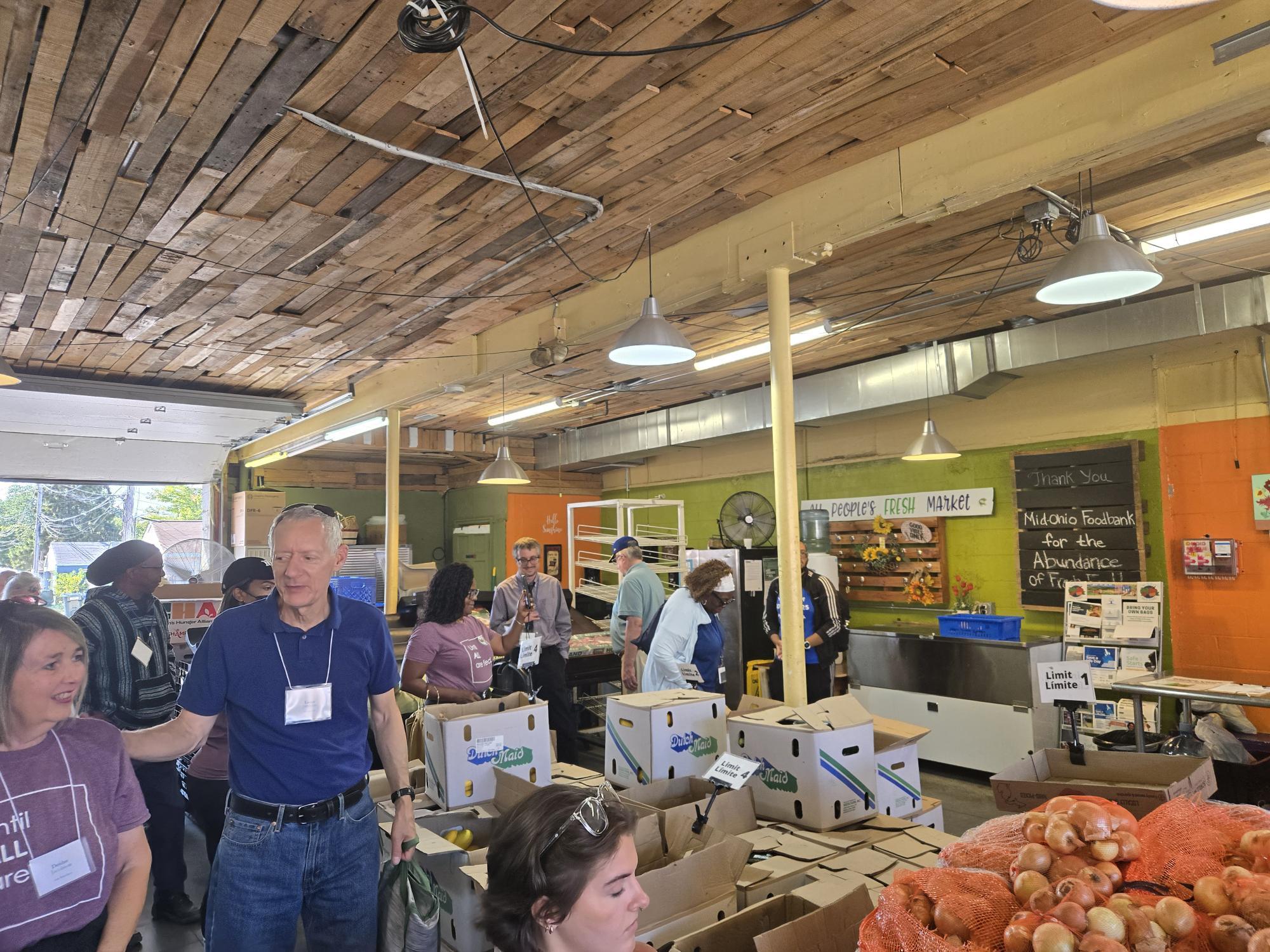 It was hard to not feel overwhelmed by the scale of Church for All People’s ministry – and at points I found myself thinking, “How does one community do all this?”. But Deacon Katelin reminded us that every single bit of their work started with small steps rooted in relationship. They didn’t just suddenly open a free store, but built relationships with neighbors, institutions, and organizations that over time made the free store a possibility. They didn’t just open Fresh Market, but tended relationships with neighbors, food shelves, and non-profits, and took advantage of a liquor store going out of business to invest in property that could serve a unique and needed purpose. And they didn’t open 350 affordable housing units at once but began with one property rehabbed by church members and neighbors. Start small, but start.
I was so grateful for the reminder that so much possibility exists in neighborhoods across our country – so much possibility exists in the neighborhoods across the Minneapolis Area Synod. And it’s easy for churches to feel like they need to launch massive initiatives from scratch to be successful. But Church for All People, and hundreds of ministries like them, remind us that it all begins by taking the relationships in our neighborhoods seriously and by taking the time to build deep and mutual connections with our neighbors, especially those who don’t often get invited to the table.
Faith & Neighboring Practices is one effort in the Minneapolis Area Synod to tend to these kinds of relationships. Our niche is accompanying congregations as they take those first faithful steps out into the community. The scaling grant from the Lilly Endowment will allow us to continue and expand this ministry in our Synod, and my prayer is that we can continue learning from partners and neighbors like Church for All People, — to start small, but to start – and to trust that God’s abundance is greater than the story of scarcity that so dominates our world. Imagine what might be possible!