
This post is one of the monthly posts blog posts written by the deans of the conferences of the Minneapolis Area Synod.
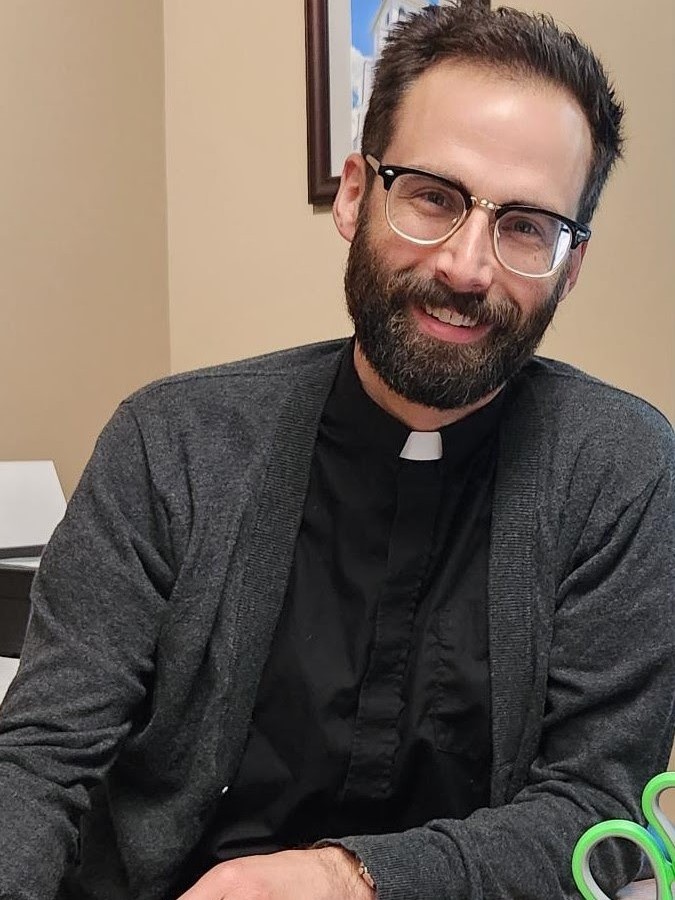 By Pastor Joseph Schattauer Paillé
Community of the Cross Lutheran, Bloomington
Dean of the Bloomington Conference
Imagine your doctor told you about a daily vitamin that would expand your breathing capacity, improve your posture, and relax muscle tension. In addition, it can alleviate symptoms of anxiety and depression in many people, and make it easier for them to form social relationships. Best of all, the vitamin had no negative side effects. “Sign me up!” you’d say.
That vitamin doesn’t exist. However, researchers tell us you can achieve all those physical, emotional, and social health benefits simply by singing in a choir.
Around the time of the Lutheran Reformation, choirs were mainly found in cathedrals or churches in urban centers. Today, most of the churches we serve have some kind of choral ensemble. (On snowy Sundays, the choir may even make up most of the assembly.) Choral and music programs can be a natural way of building interfaith, ecumenical, and even interdenominational relationships.
Last year, Jamie Manzi-Moore, who serves as the Director of Music and Worship Ministries at Community of the Cross (CCLC), partnered with St. Luke’s Lutheran Church and Oak Grove Presbyterian Church to offer a spring concert of choral and handbell music. Since they are across the street, St. Luke’s and Oak Grove had offered joint concerts before, but they looked outside their neighborhood for this most recent iteration.
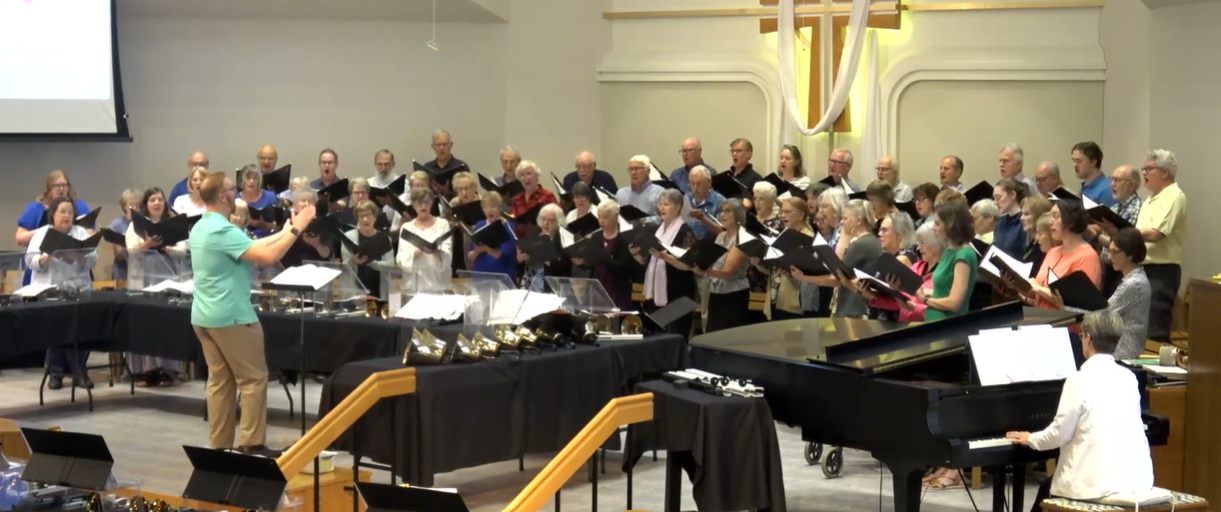
Jamie says, “I jumped at the chance as I saw it as a wonderful community building event. It is a great way to bring our churches together to experience new music, sing, and ring with a larger group. We also collected donations for VEAP, which all of our churches partner with and support.”
In addition to pieces by each church’s ensembles, the program also included combined handbell and choir pieces. “My favorite part of the program was the large group number ‘An Irish Melody’ by Margaret R. Tucker,” Jamie says, “which included all bell choirs and adult vocal choirs.”
The largest issue organizers ran into when planning wasn’t aligning rehearsal schedules or arranging music licensing or even getting enough bass singers—it was managing the overflow parking for attendees. A good problem to have!
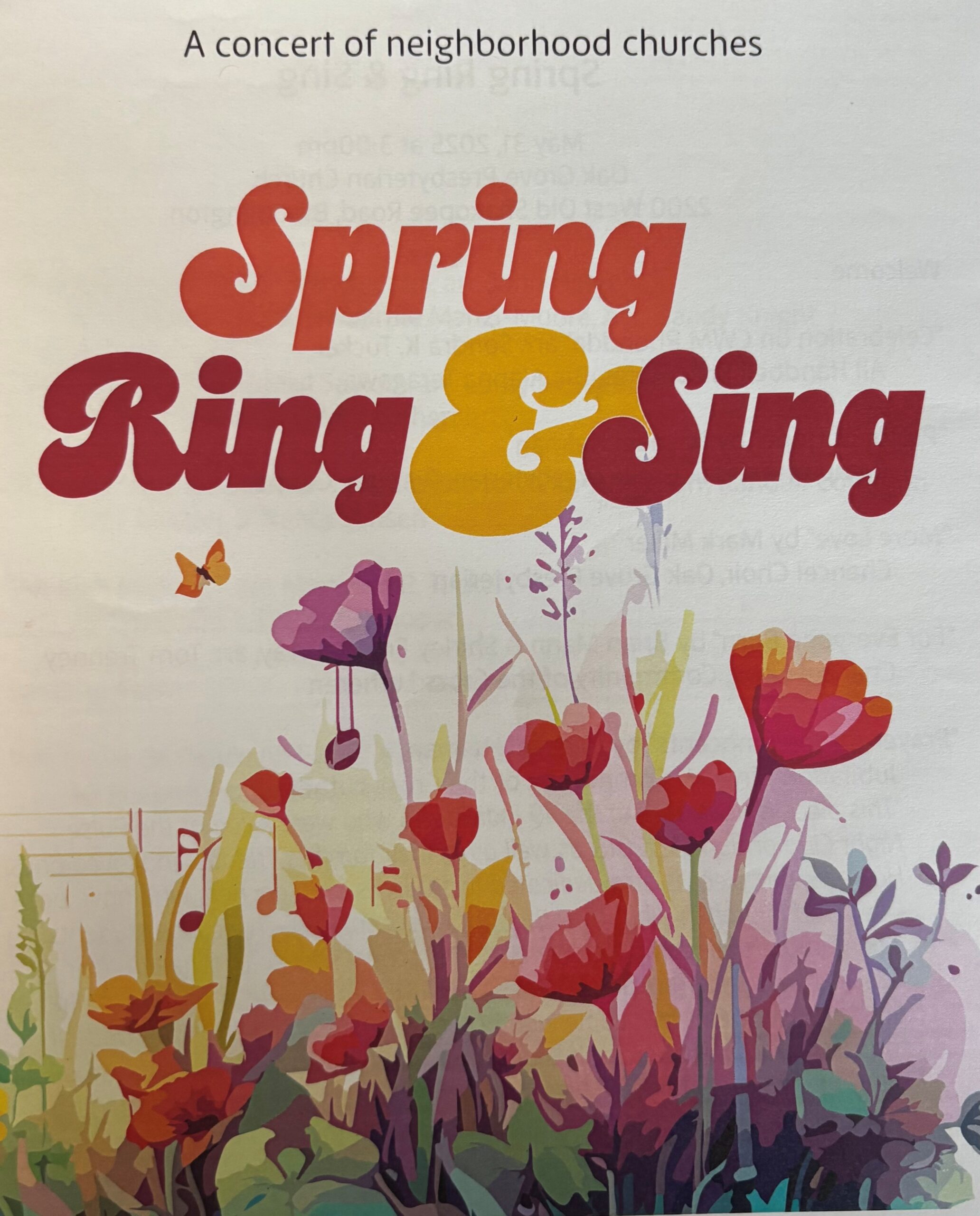
This year’s Spring Ring and Sing will be hosted at CCLC on Saturday, April 25, at 3:00 p.m. If you are interested in learning more about the planning process for this service and what ideas might work for planning a joint or ecumenical program in your own context, Jamie can be reached at music@cclcmn.org.