Guest Blogs

My Take: API Stories in Church and Scripture

June 10th, 2025

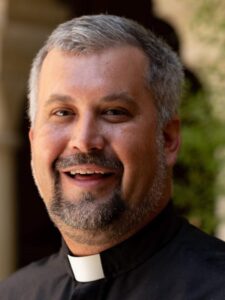
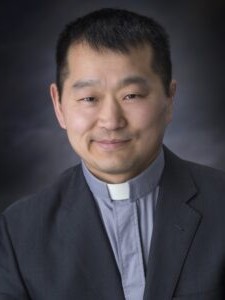
By Rev. Aaron Fuller
Originally published in Living Lutheran

For Asian Pacific Islander Heritage Month (API), I was asked to reflect on “Asians in the Bible.” I wish to focus on two characters who best represent the experience of API people: Hagar and Ishmael (Genesis 16 and 21:8-21).

Hagar is Sarah’s slave. She was given to Abraham to breed a male heir since Sarai was barren. This was successful, and Hagar became pregnant and produced a boy, Ishmael. This news traps Hagar and Ishmael in a cycle of being exiled to the wilderness and accepted back into Abraham’s house, a result of Sarah feeling threatened by them and Abraham’s indifference. Ultimately, Hagar and Ishmael were banished to the wilderness, discarded and never seen again.

Korean American theologian Grace Ji-Sun Kim writes“Invisibility persists throughout the [API] story. Occupying a vague social status, APIs have long been perceived as a deferential foreigner, an individual with economic significance who exercises their inherent diligence in academic and professional spaces but possesses little social importance. As a result, Asian Americans are widely excluded from mainstream discussions of race in this country … and thus remain in an unstable state where they can be designated as good or bad depending on political tempers …” (Invisible: Theology and the Experience of Asian American Women; Fortress Press, 2021).

Invisibility is the experience of APIs in society and the ELCA. According to the 2020 U.S. Census, APIs comprise 8% of the total U.S. population, a 35% increase from the previous census. Yet, APIs are severely underrepresented in the most visible spaces of society.  According to a 2021 study, despite APIs representing the second largest demographic across STEM career fields, they fall behind four major ethnic groups in midlevel and executive leadership positions. Within the ELCA, APIs account for less than 1% of its active membership and congregations. They are less visible among ELCA rostered ministers, representing about 2%, and no API leader has served on the Conference of Bishops in the ELCA’s 37-year history. These statistics reinforce the stigma that APIs are an invisible and “statistically insignificant” presence within society and the church.

As a result, APIs are often labeled as “model minorities” who are welcomed when their presence benefits the dominant structures of society and the church but are quickly discarded when they no longer provide value. As model minorities, they are also marginalized in conversations about race. API racism is softened in language to “Asian hate” in mainstream media and receives less attention compared to other racial groups.  While ELCA API leaders organized a “first of its kind” celebration last year, this is an exception rather than the norm, as API invisibility persists at all levels of society and the church.


I do not share these statistics and realities to shame or blame anyone. Invisibility is how APIs experience racism in society and the church. Imposing and perpetuating invisibility on us leads to abuse, hostility and exile. We find ourselves “betwixt and between,” constantly struggling with the fact that we are “both invisible and necessary to culture,” Kim writes. Like Hagar and Ishmael, accepting our invisibility is easier than speaking out against it. We try to fit in despite knowing we don’t. We return to spaces of marginalization despite the pain caused by living in them. At the same time, API invisibility calls us to crucial spiritual work, challenging our motivations as Christians within society and the church who work for racial justice. Are we equitable in our efforts to celebrate and raise concerns for all marginalized people, or is it to increase numerical and financial growth and improve the institution’s reputation? Does our cause for racial justice come at the cost of exploiting, commodifying and creating competition between the very people we advocate for?  We recognize, along with Kim, that “when we think about [APIs] as marginalized people, we recognize power imbalance and the need to give them their agency.”

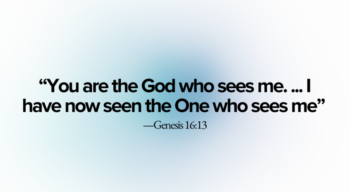
API invisibility reveals that the sin of racism creates a war within all of us, whether marginalized or privileged. We resist doing and saying what we know to be morally right, despite knowing that Christ calls us and that we must. Not wanting to expose this internal battle, we all choose invisibility. It becomes easier to justify our current efforts rather than confess their inadequacy, their potential harm, and choose a better path. Yet, I dare to speak on behalf of all API to say there is hope. Hagar and Ishmael’s story does not end in invisibility. She proclaims: “You are the God who sees me. … I have now seen the One who sees me” (Genesis 16:13; New International Version). As APIs, we do not lose heart in the struggle for racial justice. Like Hagar and Ishmael, God makes us visible, giving us the moral courage to be visible and to lead a ministry of truly seeing others as God does!

Aaron Fuller (he/him) is a transracial adoptee. He currently serves as pastor of Bratislava (Slovakia) International Church and chaplain (commander) in the U.S. Navy Reserve, representing the ELCA, and is rostered in the Minneapolis Area Synod.  

Beyond the Pulpit: Stewardship, Sustainability, and “Other Duties as Assigned”

May 27th, 2025

This post is one of the monthly posts blog posts written by the deans of the conferences of the Minneapolis Area Synod. 

By Pastor Ian Coen-Frei
Dean of the North Minneapolis Conference
Pastor at Gustavus Adolphus Lutheran Church, Minneapolis

In nearly five years of ordained ministry, the phrase “other duties as assigned” has become a familiar refrain. I suspect many rostered leaders and church staff members, especially those serving family or pastoral-sized congregations, can relate. Often, when parishioners see me engaged in tasks beyond preaching, teaching, or presiding, they’ll mention this phrase with a good-natured chuckle. But the reality is that many unseen “other duties” are crucial to the life of a worshipping community, and these often fall to the paid staff.

High on this list of unseen duties is the care and maintenance of the places where we gather for worship and community life. Since beginning my current call in August 2023, I’ve become intimately familiar with the significant time and resources required to keep our 72-year-old steam boiler system operational. Conversations with colleagues across the synod confirm a common challenge: aging buildings and worship spaces often demand a substantial portion of resources that could otherwise more directly fuel the missions we so boldly proclaim. While safe and comfortable gathering spaces are essential supports for our missions, they can inadvertently become the primary focus of our resources, rather than a catalyst for sharing them.

This is a tension I’ve certainly felt. That’s why I’m eager to share a resource that is helping my congregation shift our building from being a primary focus of resources to a catalyst for our mission.


Last fall, an ad offering “Free Smart Thermostats” for businesses caught my eye. Skeptical as I usually am about anything advertised as “free,” I reached out to the Center for Energy and Environment (CEE). To my pleasant surprise, the offer was genuine! Just two weeks later, two of our 30-year-old thermostats were replaced with new smart thermostats at no cost to us.

Then, as sometimes happens with aging infrastructure, one of our 30-year-old furnaces failed in January. While we had budgeted for a direct replacement, our collaboration with CEE led to a different outcome. They helped us navigate rebates and grants, allowing us to install a more efficient heat pump for almost 20% less than the cost of a direct furnace replacement.

More recently, noticing the many flickering and burnt-out fluorescent tubes in our fellowship hall, I remembered that CEE also conducts lighting assessments and assists with rebates to significantly lower the cost of transitioning to LED lighting. Thanks to this process, we are now poised to upgrade all the lights in our building to LED. This will not only make our space more welcoming but also significantly reduce our energy consumption and costs annually.

I’m not a spokesperson for CEE. However, as a pastor whose congregation has benefited immensely from their work – making our building more sustainable, welcoming, and comfortable – I wholeheartedly encourage other congregations to reach out to them. Discover what might be possible for your community and how your building can better serve as a catalyst for your mission.

Worshipping BOLDly

May 20th, 2025

Updated blog coming soon. In the meantime, check out BOLD’s website to learn more about their ministry. 

Not Just a Moment: What Eucharist Teaches Us About Showing Up

May 13th, 2025

By Dr. Kelly Sherman-Conroy
Associate Pastor, All Nations Indian Church
 

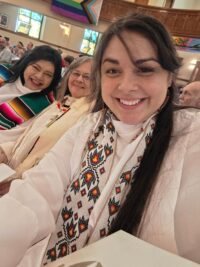
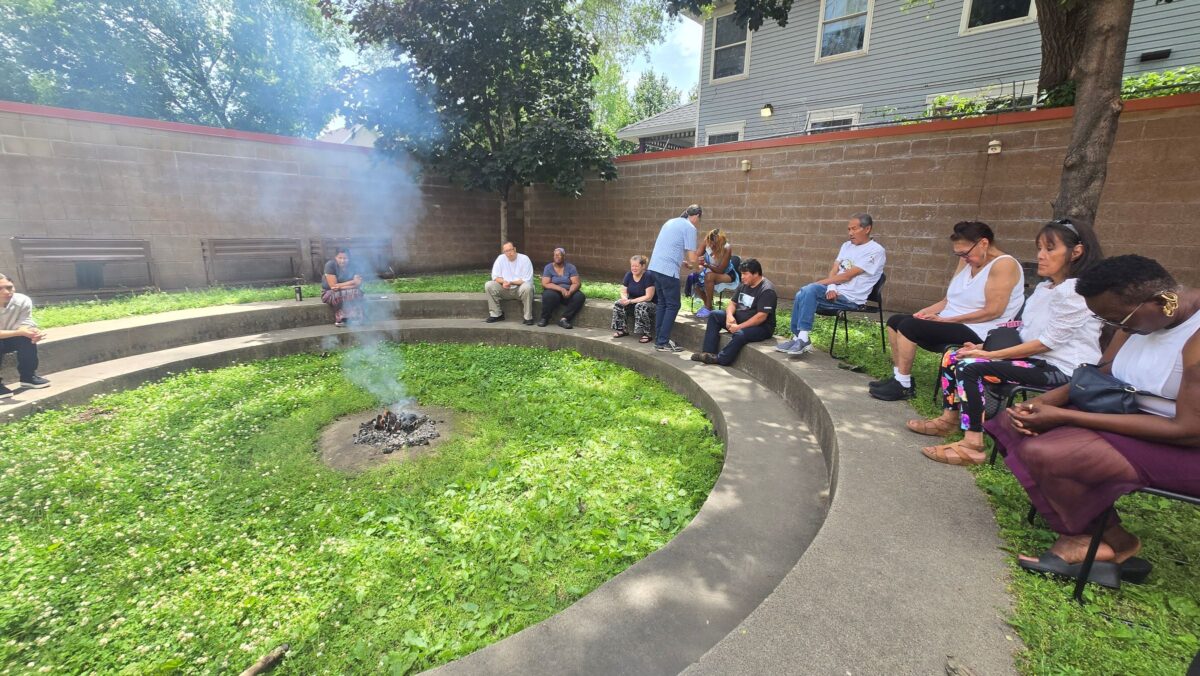
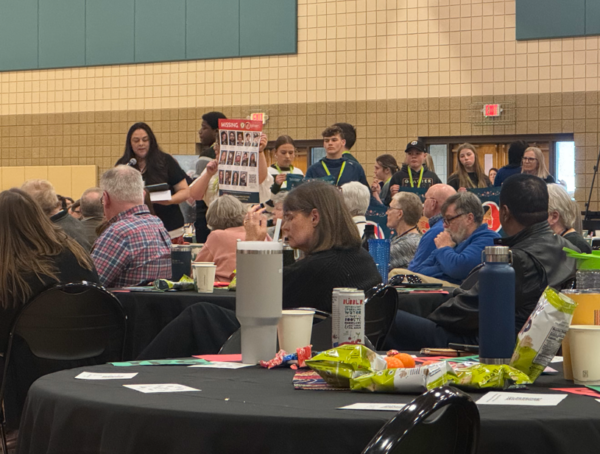
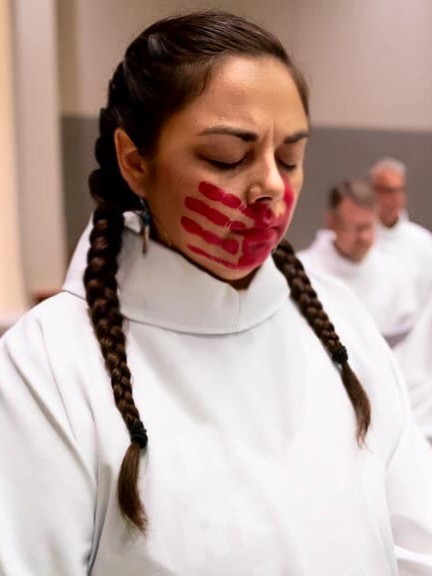
I stood alongside our youth and my friend and colleague, Brenda, at our Synod Assembly, to speak from the deep ache of our Native community. It wasn’t about statistics; it was about longing to be a whole Body of Christ. I talked about Missing and Murdered Indigenous Women and Girls. I didn’t just offer words; I offered ceremony. For me, that moment at the microphone was Eucharist. I shared what Eucharist means in my Lakota tradition. It is not just bread and wine. It is not confined to a church service or to a single moment. It is ceremony. It is relationship. It is the act of bringing someone back into the circle and making them present again through love, memory, and connection. 

Eucharist in my Lakota way is about wholeness. Eucharist is what we do when we gather in prayer, when we remember those we’ve lost, and when we act in ways that restore balance and justice. It is a lived expression of kinship. The Eucharist says, “You are not forgotten. You still belong here.” 

When I was offering ceremony at the microphone, I said that Native women make up less than one percent of Minnesota’s population, yet Missing and Murdered Indigenous Women and Girls account for eight percent of all missing women and girls in our state. That statistic is not just shocking; it is heartbreaking. Our missing beloveds and the statistics tell us what so many in our communities already know. Our lives are not treated with the same care.  

After my offering, someone stood up and questioned why Native women were being centered.  

That moment hurt. But what hurt more was what came next. 

Nothing. 

No one stood up. No one spoke out. There wasn’t a single voice of outcry from the memorial’s signers. Not one pastor stepped in. Not one friend said at that moment, “That isn’t right.” I stood there with my heart pounding, wondering if anyone would see what was unfolding. The silence became louder than the question itself. It felt like my grief was being asked to stand alone, to be put on display and be objectified. I kept scanning the room, hoping someone would meet my eyes, hoping someone in a room filled with friends and colleagues would speak to honor the ceremony I offered to the Assembly. But no one did. 

It has taken me days to name that pain of isolation and loneliness. Not just because of what was questioned, but because of who stayed quiet. The silence was heavy. It spoke its own message. 

Silence can communicate so much, depending upon context. There is a kind of silence that is sacred. The kind that holds space for grief, for the presence of God, for deep listening. There is also a kind of silence that wounds. The silence happens when truth is spoken into a space, and no one stands beside it and affirms it. There is a silence that happens when an act of harm is on public display, and no one interrupts. That kind of silence is not reverent; it is complicit in harm. 

This is not about blame. It’s about what silence communicates. 


When no one speaks up, silence reinforces the very invisibility I just named. It tells us that our stories are too uncomfortable, and that people seek comfort in silence at the expense of a beloved sibling. Our grief is too political. Our presence is too much. Silence leaves the weight of the moment on the shoulders of the already burdened. 

What I needed in that moment wasn’t a flawless response. I just needed someone to say, “I see you. I’m here.” I needed someone to share the weight. 

We talk about being the body of Christ. Paul writes, “If one member suffers, all suffer together.” That isn’t just a comforting idea. It’s a call to live differently. To listen actively. To step in when the moment is hard and the silence starts to close in. 

When we talk about Eucharist from a Lakota perspective, we are talking about a way of being. It is not a once-a-week ritual. It is how we hold memory in our bones and live it through embodied action. It is how we bring our relatives close through prayer, ceremony, and justice. It is how we say with our whole lives, “You are not alone.” 

Eucharist is an embodiment of justice. In both the Christian and Lakota traditions, it is not only something we remember, but also something we do. When Jesus said, “Do this in remembrance of me,” he was not asking for performance. He was inviting us into practice. Remembrance is not passive. It is love that moves and does. Justice takes shape in that practice. In my Lakota tradition, Eucharist is how we bring healing to what has been broken and belonging to those who have been pushed aside. 

If we want to be a Church that truly remembers, then we must be a Church that responds, that shows up and speaks when others hesitate. That is Eucharist. 


The Memorial mentioned in this blog post is RC2025 06 Memorial: Missing and Murdered Indigenous Women (MMIW). The Memorial was adopted and will be brought to the ELCA Churchwide Assembly in July 2025.

The MN Swahili Women’s Ministry…Happening!

April 26th, 2025

This post continues the Mission Table’s “Year of Partnership” highlighting the new and strategic ministries of the Minneapolis Area Synod. Minnesota Swahili Christian Church is one of the strategic ministries and worships in South Minneapolis.

By Lulu Semakula
Lulu is a high school senior at Irondale High School in Mounds View. She will be heading to Colorado to join the Airforce Academy next year.

The room is alive with color, music, and the warmth of community. Dressed in vibrant fabrics and glowing with joy, men and women (young and old) gather for what’s become the most anticipated event of our year—the annual Swahili Church Women’s Gala. It’s more than a celebration—it’s a statement of who we are and who we’ve become.

The Women’s Ministry at Swahili Church has grown in ways we never imagined. What started as a small circle of prayer and support has transformed into the strongest and most active ministry in our congregation. The women truly lead, serve, and show up. And through it all, they’ve created a space where women are empowered to connect, grow in their faith, support one another, and spread Good News to “their neighbors”.

Fundraising is crucial for our Swahili Women’s Ministry. Through annual individual financial contribution commitment and the funds obtained from selling gala tickets, the Ministry provides support for women facing pregnancy and health related challenges, general health issues, the loss of loved ones, and most importantly –offering both emotional and physical help (feeding the sick or care of children, etc.). The amount of support and care this group has for one another is priceless – considering many of us do not have blood-tied family members within the country limits.

By far, besides remaining the most vital fundraising event of the year, the Gala is the coolest and the most fun event. It is the heartbeat of the Swahili ministry. It’s a doorway to the community. It is the Swahili way we welcome others into our community: all genders, young and old adults – with open arms. Just as we all prepare our homes for guests, the Swahili Women work hard to make everything just right, from the food and music, to the decorations and conversation and sometimes traditional dances by several aunties. It’s the community’s way of saying, “Karibu! (Welcome!). Come in and let’s connect and have a good time together.”

On a personal note, it is an honor to share this fun part of my congregation. At the Gala, we dance, we eat, we laugh—and in the process, we build deeper relationships that stretch across generations and cultures. The Gala, and the ministry behind it, is a bridge between our African roots and the American lives we’re building. It’s a way of holding both identities with pride, honoring our past while embracing our future.

If you’ve never joined us before, this is your invitation. Come experience the joy, the sisterhood, and the powerful spirit that fills the room. Come be part of something beautiful on Saturday, May 3, at the Mounds View Community Center.

You’re invited: 

RALY The Youth

April 22nd, 2025

By Pastor Neal Cannon, Woodlake Lutheran Church, Richfield
Pastor Neal is co-pastor with Pastor Micah Pearson, who is the Dean of the Crosstown Conference 

These days, it’s hard for many churches to do youth ministry on their own. Most of us see it in our pews, as fewer and fewer families regularly attend worship. If you have a small-to-medium-sized church it’s not uncommon to have only two or three families you can count on to be in attendance most Sundays, if any. Maybe you’ve tried to host a “pizza and game night” for teens, but only a few kids show up. You’re excited for those kids to be there, but it’s hard to create and sustain energy for a program this size. You might feel frustrated and the kids might lose interest because there aren’t enough other kids there. It’s a lose-lose situation.

Woodlake and House of Prayer were two churches struggling to do youth ministry on our own until one day we asked, what if we did this together? The result of this wondering was RALY (Richfield Area Lutheran Youth). RALY is a shared youth group between our two churches that has created meaningful vitality for our youth and congregations. On our own, we couldn’t sustain Wednesday evening activities, do high school youth group, or host a lock-in. But together we are able sustain and grow programs and activities. Together, we were able to create an environment where kids wanted to come and invite their friends. After combining our programs, we went from lose-lose to win-win very quickly.


The Bible is not shy about encouraging collaboration.  Be it Matthew 18:20 (where two or more are gathered in my name…) or Mark 6:7 (He called them twelve and began to send them out two by two…) or Genesis 2:18 (It is not good that the man should be alone…) we are often encouraged to do life and ministry together. These lessons are often applied to the individual, but why shouldn’t it be applied to our churches as well? As the cultural landscape continues to evolve, our best chance at doing meaningful youth ministry might be by doing it together.

Who could you collaborate with? Is there another church in your area in a similar situation with similar struggles? Could you work together and dream about building something bigger than you could have dreamed up on your own? If you can find a partner to do ministry together, I encourage you to try it! Or, if you’re in the Richfield area, come talk to us about RALY. We’d love to share ministry with you!

You can learn even more about RALY by watching this video.

Being Sanctuary

April 8th, 2025

This post continues the Mission Table’s “Year of Partnership” highlighting the new and strategic ministries of the Minneapolis Area Synod. St. Paul’s-San Pablo is one of the strategic ministries and worships in South Minneapolis.

By Pastor Hierald Osorto

Soft lighting and soothing music create an ambience of calm. A circle of massage tables and zero-gravity chairs awaits their occupants. Over the next several hours, practitioners will offer individuals free sessions of acupuncture, reiki, or cupping therapy. This Sunday afternoon, the historic sanctuary of St. Paul’s-San Pablo Lutheran Church has been transformed into a haven of respite and well-being.

Sanctuary: It’s not just a place where we gather, but we who are St. Paul’s-San Pablo. As a multilingual, multicultural, inclusive congregation, we strive to create spaces of belonging and welcome in South Minneapolis. That’s why we host the Phillips Neighborhood Clinic, where University of Minnesota medical students care for our underinsured neighbors. That’s why we founded the Semilla Center for Healing and the Arts, a non-profit that encourages creative expression in youth and young adults. For 137 years, this church—founded by Swedish immigrants—has accompanied people willing to cross borders and overcome barriers to make a better life in this country. By the grace of God, we’re not stopping now.


In recent months, St. Paul’s-San Pablo has been discerning how to be a sanctuary in this anti-immigrant political climate. If you had asked me a year ago whether that would look like offering complementary, traditional medicine once a month, I’m sure I would have raised a skeptical eyebrow. Today, I am a grateful witness to Christ’s healing ministry, embodied in gentle hands and practices that ease the immense stress weighing on under-documented immigrants. I have seen how relaxed individuals looked after rising from their massage table or zero-gravity chair: as if they had exhaled after a long-held breath.

Yes, we partner with immigration attorneys. Yes, we educate ourselves about our legal rights. But no, we refuse to let fear course freely through our bodies and corrode our well-being. We are a sanctuary for the whole person, because the Holy One loves each person wholly and without exception. This is God’s call to us, which we are answering with energy and enthusiasm. If the Spirit is also stirring in your heart, come and join us. Come plant native flowers for our healing garden. Come dance at our summer block party. Come be sanctuary with us in these uncertain times and rest in the healing love of God.

Reaching Out in Fridley

April 1st, 2025

By Pastor Matt Flom
Outgoing Dean of the Rum River Conference

Pastor at St. Philip’s Lutheran Church, Fridley


When I think about the Minneapolis Area Synod’s theme for the year, Church Together, I instantly think of all the outreach ministries that the people of St. Philip’s shepherd. I came to St. Philip’s in Fridley back in 2018, and I’ve had such a great time seeing how the people here get involved in service. There are many outreach ministries here, but there are four that really stand out for their impact.  


Members of the St. Philip Disaster Relief team made personal care kits for those impacted by Hurricane Helene

St. Philip’s Disaster Relief 

The St. Philip’s Disaster Relief team started as an effort to help with the Hurricane Katrina disaster.  Since then, they have gone on over 70 mission trips.  The team rebuilds homes, schools, churches, and more. Folks from over a dozen different congregations, of several denominations, and from several different states regularly go on their trips.  The mission is to rebuild homes, but they see themselves as primarily ministering to the people affected by natural disasters, helping to rebuild lives as well.   


Preparing the food shelf

Food and Clothing Shelf 

The food and clothing shelf offers guests the opportunity to come once a month to fill two grocery bags of food and one bag of clothes. Currently, they distribute more than two tons of food and more than seven hundred pounds of clothing each month.  The food and clothing shelf has fridges and freezers so they can distribute not only dry goods – but also milk, meat, cheese, and eggs. If you are interested in supporting this ministry, there are many ways to get involved. They are also always looking for more Spanish interpreters. 


St. Philip’s members at the annual garage sale

Annual Garage Sale 

St. Philip’s is also known for its garage sale.  It may not be the biggest garage sale in Christendom, but I believe it’s the grandest.  Almost the entire building (41,000 square feet) is turned into a garage sale department store.  Close to a hundred people from a half dozen congregations volunteer for three weeks in August.  It opens on a Wednesday afternoon and the line to get in wraps around the building and through the parking lot. Last year, the team used the proceeds to give grants to a dozen service organizations in the metro area.    


Curbside Community Meal 

St. Philip’s has a curbside community meal each Wednesday.  The number of meals served tends to vary, but lately, they’ve been distributing around 175 meals a week. Students from local high schools, members of other congregations, and members of the community come to volunteer.  Each week, I get to walk down the car line and visit with guests and often pray with them. I call it our curbside congregation. One member of our church only came for the curbside meal and never once stepped foot in the building itself. When he passed away, I was honored when his family told me he wanted to have his funeral at the church. We never know how we might reach someone when we step out into the community in love!  


There is so much more I could write about the servant hearts at St. Philip’s, but the trend you see from the folks here is a passion to serve others, working with all who have a heart to help, and having a lot of fun in the process. When we work together, across churches and denominations, to partner with organizations locally and globally, that’s where being Church Together really shines through. 

Building Community Through Singing

March 25th, 2025

By Kent Goodroad and Alyssa Schwitzer

You may recall that on January 11, 2025, the Synod launched a first-of-its-kind Synod Youth Choir. We’re excited to provide an update about how things have been going!

With 50 youth registered from eight different cities within the Minneapolis Area Synod, we’ve had four weekends of rehearsals at three different locations (11 rehearsals so far). Thank you to our host churches, Lake Nokomis, Christ the River of Life, St. Barnabas, and St. Andrew! Over the past few months, the Synod Youth Choir has engaged these young people in music-making and community-building across our Synod. When we started this new youth ministry endeavor, our goals were to: 

  • Create community amongst youth within the MAS  
  • Sustain relationships with churches within the MAS and beyond 
  • Build youth identity and power within the church 
  • Build beloved community around music 

We believe that giving our youth the opportunity to practice and grow in their gifts within communities of faith fosters deeper roots in the church. Connecting them with other youth and adults outside of their own churches gives them a broader understanding of how we are Church Together.

At one of our recent rehearsals, we saw a beautiful moment of leadership development happen right before our eyes. There were hand drums in our rehearsal room and one student asked if they could drum and sing. We said “of course!” The student began drumming and singing. They then noticed other students wanted to drum, so they started getting drums and inviting other students to drum and sing. Students were stepping up and taking ownership of the choir, seeing it as “their choir” and inviting other students to do the same. It was incredible to witness!


We’re preparing for our first big performance coming up on May 3. We will be singing on Saturday morning at the 2025 Synod Assembly! We have three rehearsals left at the different locations, and then one big rehearsal with all 50 students together in April in preparation. We’re also starting to plan a concert on June 1 at 2:00 p.m. More details will come in the next few weeks, but we can say, get ready to party with the Synod Youth Choir! We hope you can attend one of these performances to support and celebrate these up-and-coming leaders. 

If, while reading this post, you have felt energized and encouraged, consider partnering with us! The Synod Youth Choir has a fundraising goal of $20,000. Funds go toward programming, meals, music, translators, t-shirts, and other logistics. Participating congregations are contributing what they can, and we are asking individuals and organizations that value faith-filled youth development to consider investing in MAS youth through a financial contribution. Any amount would be appreciated and would make a difference in the life of a Synod youth.  You can donate online or send a check to the Minneapolis Area Synod (122 W Franklin Ave #600, Minneapolis, MN 55404). Make your check payable to Minneapolis Area Synod with “Synod Youth Choir” in the check memo line. Thank you! 

“You Are Not Nobody.”

March 10th, 2025

By Pastor Jane Buckley-Farlee

This post continues the Mission Table’s “Year of Partnership” highlighting the new and strategic ministries of the Minneapolis Area Synod. Trinity Lutheran Congregation is one of the strategic ministries and worships in the Cedar-Riverside neighborhood in Minneapolis.

Every first Friday night of the month a group from Trinity Lutheran Congregation stands on Cedar Avenue, between Palmers Bar and the Cedar Cultural Center, to hand out pizza and Somali tea. A few “first Fridays” ago it was cold, the temperature in the mid-teens with Cedar Avenue serving as a wind tunnel. Our paper plates and cups blew down Cedar, along with random cans and pieces of paper. We were out there, not because we enjoy the cold and the wind, but because we support an initiative in Cedar-Riverside called Daryeel Youth.

Sharing pizza and tea with neighbors

Every Friday night Abdirahman Muhktar is out there serving pizza and tea to the young adults most likely to overdose on drugs. Along with some of his volunteers, Abdi is out there because he knows that if they have some food in them on a Friday night, they are a little less likely to overdose. He knows all of the young people and has seen many die from opioid addiction over the years. He has spent years building relationships with them and when we help serve the pizza and tea, he can concentrate on talking with them and building relationships. When it’s cold out, like this Friday was, we also hand out jackets, hats, mittens, and socks.

After I had been handing out some tea and pizza for a while, a young man came up to me and said that he heard I was a pastor. I hadn’t met him before and learned that his name was Mohamed. Mohamed liked to talk about theology, Islam and Christianity to be exact, and he knew what he was talking about. Even though he did get some details about Christianity wrong, that was not important. Making the connection and listening was. When I told him that he really knew his stuff his he looked down and whispered,

“I take drugs.  I’m nobody.”

“You are not nobody.”

“Yes, I am.  I am nobody.”

“Mohamed, you are not nobody.”

Then, he walked away. I wanted to chase him and grab him and tell him again and again until he understood me, that he was not a nobody. Instead, he slowly disappeared behind Palmer’s Bar.

The next first Friday was cold again and Mohamed did not come for pizza and tea. Abdirahman assured me that he was still alive. I want to talk with him again, to try and let him know one more time that he is not nobody. The reality is that I may never see Mohamed again. I certainly don’t expect to see him on a Sunday morning.

A Friday night team on Cedar

This is one reason Trinity remains in Cedar-Riverside. There are too many like Mohamed who believe they are nobody in this thriving neighborhood. For too many people our neighborhood, Cedar-Riverside (aka Little Mogadishu) is just a scary place full of Muslims, criminals, and addicts.

Cedar-Riverside seems like the kind of place where Jesus might hang out. When the evening Adhan (Call to Prayer) calls out from Dar-Al- Hijrah, it’s a reminder to everyone that are all God’s people. We do what we can, handing out pizza and tea, building relationships, and hoping to be a glimpse of God’s love along the way.


Go to Top